As a vegetarian, it is important to make sure that your body gets the appropriate amount of protein for basic daily living. As an active vegetarian, it is even more important to make sure your body gets the nutrients it needs to help recover and grow stronger after a long run or an intense resistance training session. If you’re busy like me, it may be tricky to get proper protein intake while you’re on the go. According to Nutrition for Sport and Exercise (Dunford & Doyle, 2015) recreational athletes are recommended to have a daily intake of 1.0g of protein per kilogram of body weight. For higher-level athletes, the daily intake is even higher. The table below provides more specifics for different level of activity.
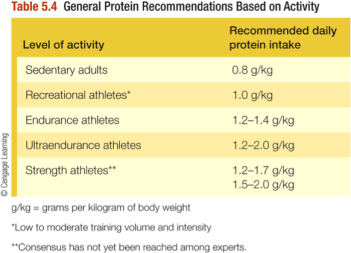
In this post, I am going to briefly review different vegetarian friendly protein sources, specifically ones that are quick and conducive to a busy lifestyle, such as nutrition bars, green smoothies with added protein supplements, and grab and go snacks.
Nutrition Bars
There is no doubt that energy bars are an excellent snack for people on the go, however, with so many options out there, it’s easy to get overwhelmed with choosing the right one for you. There is the option of protein bars, energy bars, high-carbohydrate bars, meal replacements bars, diet bars, brain-boosting bars, and bars made especially for women. It is important to make sure that you examine the nutrition labels carefully and have an idea of what you’re looking for in a bar. A study out of Ohio State University compared two different types of energy bars with endurance athletes and their performance after eating the different bars (Hertzler, 2000). The Ironman PR Bar demonstrated increased blood sugar levels that remained steady, which can provide a readily available energy source for increased performance. The Power Bar did not have this affect. Instead, it produced a rapid increase in blood sugar that then decreased quickly (Hertzler, 2000). Hertzler also explains that the composition of the Ironman PR Bar of 40% carbohydrate, 30% fat, and 30% protein may have contributed to the increased endurance performance.
But how do you choose the right bar for you? Here are a few tips for consideration when making your selection (Vogin, n.d.):
- Limit fat to less than 5grams
- Pay attention to portion size
- For a meal replacement bar, look for a bar that has 15grams or more of protein along with some fiber and 35% of the recommended daily allowances for vitamins and minerals
- Are you going to like the taste and actually eat it?
Although nutrition bars are handy, it is important not to rely on them for all your nutritional needs. Many dieticians will emphasize the importance of not letting them replace whole foods (Vogin, n.d.). It is even recommended to eat a little whole food with your bar, such as some fruit or vegetables.
Smoothies
First of all, yum! Smoothies are great because with a little prep work a head of time, they can be a quick and easy on the go snack or meal. The added beauty about smoothies is that you can completely customize the recipe to include flavors you like! Green smoothies are growing in popularity and you can find many recipes by using Google or Pinterest. I searched the term “protein smoothie recipe” in Pinterest and hundreds of options appeared giving me a range of flavors and ingredients! Smoothies are great for providing additional protein in your daily diet in two ways:
- Adding whole, protein rich foods into the smoothie or
- Mixing protein powder supplements into the smoothie
If you choose the natural food route for added protein, foods like spinach or other leafy greens, oats, milk, low-fat Greek yogurt, hemp seeds, flax seeds and peanut butter can be added to your smoothies. I must admit, it took me a little while to come around to the idea of adding spinach to my fruit based smoothie, but I promise you, once it’s all blended, you don’t even taste it! Only the fruity goodness of your nutritious smoothie!
One tip I have is to create pre-made single servings in freezer bags with all the ingredients you need so whipping up the smoothie is a breeze! And bonus, the ingredients are already cold, so no need for ice! If you choose to add leafy greens to your smoothie, you have the option to pre-blend and freeze ahead or add fresh greens directly into the smoothie. I found this great tutorial here.
Should you decide that adding a protein supplement to your smoothies is more up your ally, then there are a lot of options for that as well! Many dietitians will recommend a person getting their nutrients through food rather than relying on supplements, however many acknowledge that athletes find it difficult to consume all their protein requirements through food alone (“Whey Protein, ‘Whey’ Worth It | Mary Rodavich, MS, RD, LDN,” n.d.). This is often when using a protein supplement is useful.
Vega is a plant based protein powder that comes in five different flavors and can be added to a smoothie or combined with water. The product advertises a single serving (1 scoop) is 90 calories and contains 15g of protein from a plant-based blend of peas, SaviSeed, hemp seed, and sprouted whole grain brown rice. There are many products on the market out there that could be added to a smoothly to increase daily protein intake, it is important that you read the labels to make sure you’re not adding excessive sodium or sugars to your diet.
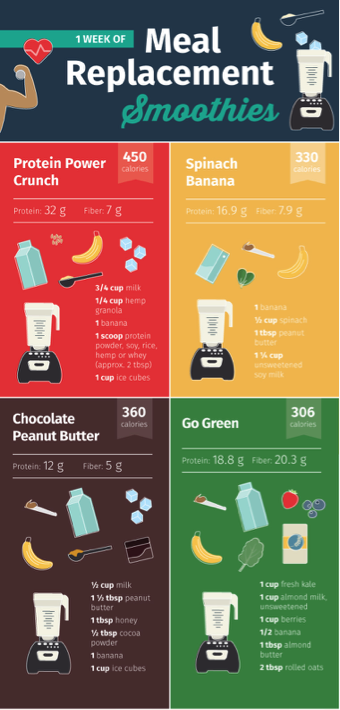
Click on the image below for some ideas for smoothie recipes! Some recipes include protein powder while other do not. (“7 Meal Replacement Smoothies,” 2015)
Quick Snacks
For those that have the time to do a little more prep-work for on-the-go snacks and meals, getting enough protein on a vegetarian diet is totally doable! By eating whole foods, you’re able to get creative with your meals and snacks and also eat foods that you like!
When you’re planning your meals for the week, it’s important to make sure that they are foods that you will eat. Something that is important for me is to buy individual servings of things like cottage cheese and yogurt. I know it’s better for the environment to buy in bulk and use Tupperware, but in being honest with myself and my schedule and cleaning habits, in order for me to eat the healthy snacks I buy, I need them individually packaged.
To help with some of your high-protein meal and snack prep, here is a list of a few of my favorite foods that are high in protein:
- Cottage cheese
- Eggs
- Peanuts (I have an allergy to tree-nuts, so unfortunately I have to miss out on almonds and other yummy nuts)
- Low-Fat Greek yogurt
- Spinach
- Tofu
For a more detailed list of vegetarian friendly foods high in protein, you can visit this site (Eubanks, n.d.).
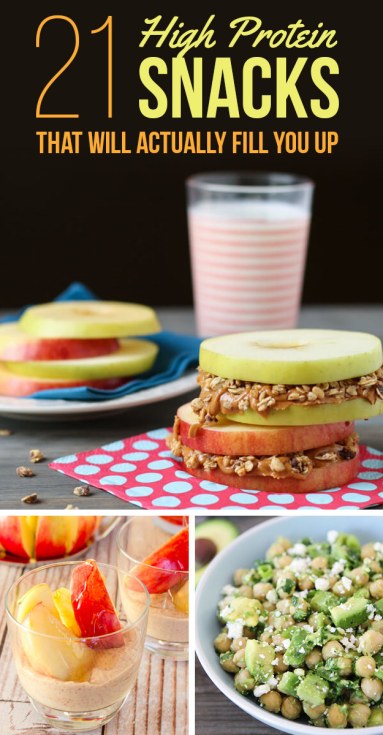
Also, I just had to add a link to this list below for 21 High Protein Snacks I found the other day while mindlessly clicking through Buzzfeed. Although the list isn’t all completely vegetarian friendly meals, many of them are or could be made veggie friendly with some substitutions.
Being protein aware is something that is relatively new to me since becoming a vegetarian in 6th grade. I’ve had to do some research and be very mindful of my shopping and eating decisions.
What kinds of things do you do to make sure you’re getting enough protein in your diet? Please share in the comments below and hopefully we can all share some information with each other!
Thanks,
Katie
References
7 Meal Replacement Smoothies. (2015, June 8). Retrieved from http://www.blendtec.com/blog/meal-replacement-smoothies/
Dunford, M., & Doyle, J. A. (2015). Nutrition for Sport and Exercise (3rd ed.). Cengage Learning.
Eubanks, A. (n.d.). Where Do Vegetarian Athletes Get Their Protein? Retrieved from http://schreiner.edu/academics/majors-and-programs/exercise-science/performance-articles/2-vegetarian-article-ptj.pdf
Hertzler, S. (2000). Glycemic Index of “Energy” Snack Bars in Normal Volunteers. Journal of the American Dietetic Association, 100(1), 97–100. http://doi.org/10.1016/S0002-8223(00)00030-4
Vogin, G. D. (n.d.). Nutrition Bars: Healthy or Hype? Retrieved March 26, 2016, from http://www.webmd.com/diet/nutrition-bars-healthy-hype
Whey Protein, “Whey” Worth It | Mary Rodavich, MS, RD, LDN. (n.d.). Retrieved March 26, 2016, from https://maryrodavichwvudietetics.wordpress.com/2012/08/05/whey-protein-whey-worth-it/

 ut I liked the recipe posted on


